Sale!
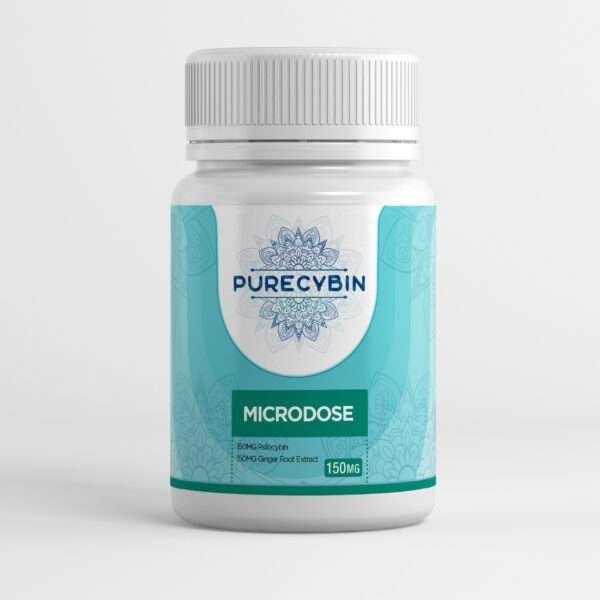
Balanced mood and reduced mental fatigue
$ 94.50
Purecybin Microdose Blend 150mg: A Comprehensive Review and Buyer’s GuidePurecybin Microdose Blend 150mg is a capsule product marketed for microdosing psilocybin mushrooms. Whether a 150mg capsule produces genuinely sub-perceptual effects depends on actual psilocybin concentration, formulation quality, and individual neurochemical sensitivity — not capsule weight alone. Consumers should independently verify ingredient transparency, third-party laboratory testing, contaminant screening, and applicable local laws before purchasing or using any such product.Purecybin Microdose Blend 150mg is a mushroom capsule product positioned within the rapidly growing psilocybin microdosing market. Capsule weight is not a reliable proxy for psychoactive potency.Actual effects are determined by verified psilocybin concentration, mushroom species, extraction method, and the individual’s metabolic profile and baseline neurochemistry.Clinical research into psilocybin — conducted by institutions including Johns Hopkins University and Imperial College London — is scientifically promising but remains in active investigation, particularly regarding microdose-specific protocols.Responsible consumers should prioritize manufacturers that provide third-party laboratory testing, full ingredient disclosure, contaminant screening for heavy metals and microbial agents, and traceable batch documentation.Because psilocybin remains a Schedule I controlled substance under U.S. federal law — with jurisdictional variation across states including Oregon and Colorado — purchasers must verify their local legal standing and consult a qualified healthcare professional before use, particularly when managing existing medical conditions or prescription medications.Introduction: Why Microdosing Demands More Than MarketingThe phrase “microdosing psilocybin” has moved from fringe experimentation into mainstream wellness conversation — appearing in peer-reviewed journals, clinical trial protocols, and consumer product marketing with equal frequency. This convergence creates a meaningful problem: the scientific standard for microdosing and the commercial standard are not the same thing.Purecybin Microdose Blend 150mg sits at the center of this tension. As a product marketed specifically for sub-perceptual psilocybin use, it raises questions that every informed consumer should be able to answer before purchasing.What is actually inside the capsule? How is potency verified? What does current research say about microdosing at this dose range? And critically — is this product legal where you live?This guide addresses each of those questions with precision. It examines the science behind psilocybin microdosing, evaluates what responsible product quality looks like, maps the legal landscape across U.S. jurisdictions, and outlines the harm reduction principles that should accompany any engagement with psilocybin-containing products.Whether you are a first-time researcher or an experienced practitioner evaluating a specific product, this resource provides the analytical framework to make an informed decision.What Is Purecybin Microdose Blend 150mg?Purecybin Microdose Blend 150mg is a commercially marketed capsule product positioned for microdosing. In the context of consumer mushroom products, “microdose” typically refers to a sub-perceptual dose — one intended to produce functional benefits without inducing a psychedelic experience.The 150mg figure refers to total capsule weight, which may include dried mushroom material, functional mushroom extracts, or additional supplement ingredients depending on the specific formulation.Critically, total capsule weight and active psilocybin content are not equivalent measurements. A 150mg capsule could contain a wide range of actual psilocybin concentrations depending on mushroom species, growing conditions, drying method, and manufacturing process.For context, laboratory analyses of Psilocybe cubensis — among the most widely cultivated psilocybin-containing species — have documented psilocybin concentrations ranging from approximately 0.14% to over 1.8% of dry weight.This variance means that two 150mg capsules from different manufacturers, or even different batches from the same manufacturer, could deliver meaningfully different psychoactive doses.What this means for consumers: The product name and milligram figure alone are insufficient to evaluate potency, safety, or suitability. Third-party laboratory testing with documented potency analysis is the minimum acceptable standard for any psilocybin-containing product claiming a specific dose.Typical Ingredient Categories in Microdose BlendsProducts marketed as microdose blends commonly contain some combination of the following ingredient categories:Psilocybin mushroom material: Dried fruiting bodies or mycelium from species such as Psilocybe cubensis, including cultivars like Golden Teacher or Blue MeaniesFunctional mushroom extracts: Lion’s Mane (Hericium erinaceus) is frequently included for its association with nerve growth factor (NGF) stimulation and neuroprotective propertiesNootropic compounds: Niacin (Vitamin B3) and L-theanine appear in some formulations based on stacking protocols popularized within microdosing communitiesAdaptogenic ingredients: Ashwagandha, rhodiola, or other adaptogens are occasionally added to support the product’s wellness positioningThe specific composition of Purecybin’s formulation should be disclosed on its product label. Consumers should request or locate a Certificate of Analysis (COA) that confirms both what is present and at what concentration before making any purchasing decision.Is 150mg a True Microdose? Understanding the ScienceThe concept of a psilocybin microdose lacks a universal clinical definition — and that is one of the most important, least-discussed facts in consumer microdosing literature.In research contexts, a microdose is typically characterized as approximately one-tenth of a standard psychoactive dose — a threshold calibrated to remain below the level of perceptual distortion.For psilocybin, common research protocols have used doses in the range of 0.1mg to 0.3mg of pure psilocybin per kilogram of body weight as active doses. This places a microdose at roughly 0.01mg to 0.03mg/kg — or approximately 1mg to 2mg of pure psilocybin for an average adult.Whether a 150mg mushroom capsule delivers that amount of active psilocybin is entirely dependent on the psilocybin concentration of the mushroom material used. Without verified potency data, the label claim of “microdose” is a marketing descriptor, not a pharmacological guarantee.Research Context: What Science Currently SupportsPsilocybin research has accelerated substantially since landmark studies at Johns Hopkins University and Imperial College London demonstrated clinically significant effects for conditions including treatment-resistant depression, end-of-life anxiety, and substance use disorders.However, the majority of this research involves single or multiple macro-doses administered in controlled clinical settings — not the chronic, low-dose self-administration model that consumer microdosing products target.Microdose-specific research is a newer and more contested field. Key findings to date include:A 2021 study published in eLife found that microdose participants reported improvements in mood, focus, and reduced anxiety — but when placebo controls were applied, the magnitude of benefit attributable to psilocybin specifically became less clearResearch led by Dr. Vince Polito at Macquarie University documented that regular microdosers report reduced depression and stress over time, though the absence of robust placebo controls in naturalistic studies limits causal attributionMechanistic research suggests psilocybin acts primarily at the 5-HT2A serotonin receptor, potentially promoting neuroplasticity, increasing Brain-Derived Neurotrophic Factor (BDNF) expression, and modulating activity within the Default Mode Network (DMN) — a brain network associated with self-referential thought and ruminationThe critical distinction: Promising mechanistic and observational evidence does not yet constitute clinical validation of consumer microdosing products. The gap between what research suggests and what any specific commercial product delivers remains significant, and intellectually honest engagement with microdosing must acknowledge that gap.Purecybin 150mg Capsules: Evaluating Product QualityFor consumers evaluating any psilocybin capsule product, including Purecybin 150mg, product quality is not a secondary concern — it is the primary one.The following standards define what responsible manufacturing looks like in this product category.Third-Party Laboratory TestingThe single most important quality indicator for any psilocybin-containing product is independent, third-party laboratory testing. A credible Certificate of Analysis (COA) should confirm:Potency analysis: Verified psilocybin and psilocin concentrations expressed in milligrams, not only as a percentage of capsule weightHeavy metal screening: Testing for lead, arsenic, mercury, and cadmium — contaminants that accumulate in mushroom substrates and pose meaningful health risksMicrobial testing: Screening for bacteria, mold, yeast, and pathogenic organisms including E. coli and SalmonellaPesticide and solvent residue testing: Confirmation that no prohibited agricultural chemicals or processing solvents are present in detectable quantitiesBatch-specific documentation: COAs should correspond to specific production lots, not serve as generic, undated marketing documentsConsumers should be able to access a COA for the specific batch they are purchasing — through a QR code on packaging, a manufacturer website, or direct request. Manufacturers that decline to provide batch-specific laboratory documentation should be treated with significant skepticism.Ingredient Transparency and LabelingResponsible labeling should include a complete ingredient list with quantities, the mushroom species used, whether fruiting bodies or mycelium are included, and the specific cultivar where relevant.Vague descriptors such as “mushroom blend” or “proprietary formula” without accompanying potency data make independent evaluation impossible. These practices are inconsistent with quality manufacturing standards.Good Manufacturing Practices (GMP)Products manufactured under documented Good Manufacturing Practices are produced in facilities subject to standard operating procedures designed to ensure consistency, prevent contamination, and maintain product integrity across batches.GMP compliance does not guarantee potency claims are accurate. However, it represents a meaningful baseline quality commitment that distinguishes serious manufacturers from informal operations.Purecybin 30 Capsules: Packaging and Value ContextPurecybin products are commonly available in 30-capsule formats, which aligns with widely used microdosing protocols that incorporate rest days and cycling periods.Consumers evaluating the value proposition of a 30-capsule product should calculate cost relative to verified psilocybin content — not relative to total capsule count or weight — and compare that figure against available laboratory data for competing products.Microdosing Protocols: How 150mg Fits Within Common FrameworksConsumer microdosing protocols have been developed primarily through community-sourced experimentation rather than clinical design. Several frameworks have achieved widespread adoption, and understanding how a 150mg capsule fits within them is essential for evaluating practical application.The Fadiman ProtocolDeveloped by psychedelics researcher Dr. James Fadiman and popularized through his 2011 book The Psychedelic Explorer’s Guide, the Fadiman Protocol involves:Day 1: MicrodoseDay 2: Transition day (no dose)Day 3: Normal day (no dose)Repeat cycleThis protocol is designed to allow observation of both direct effects and residual afterglow effects while preventing tolerance accumulation. In a 30-capsule product, this schedule provides approximately ten dosing days across a roughly one-month period.The Stamets Stack ProtocolMycologist Paul Stamets has proposed a stacking protocol combining psilocybin mushrooms, Lion’s Mane, and niacin — a combination theorized to synergistically support neuroplasticity and nerve growth factor stimulation.Products that include these three components are specifically designed for this approach. Consumers should verify that the included niacin dose is sufficient to produce a “flush” response, which Stamets identifies as functionally relevant to the protocol’s proposed mechanism.Intuitive and Minimal ProtocolsSome practitioners advocate for less structured approaches, including dosing only as needed or once weekly.There is no clinically validated “optimal” microdosing protocol. Existing schedules reflect practitioner opinion and community consensus rather than controlled trial outcomes.Key principle: Any microdosing protocol should begin with the lowest plausible dose, incorporate structured observation periods, and include planned breaks to assess baseline function without the product.Side Effects and Safety ConsiderationsEven at sub-perceptual doses, psilocybin-containing products carry a side effect and safety profile that consumers must evaluate honestly.Reported Side Effects at Low DosesClinical and observational literature documents the following side effects in association with psilocybin microdosing:Anxiety and restlessness: Particularly common in individuals with pre-existing anxiety disorders or during initial useNausea: Reported by a subset of users, more commonly associated with raw mushroom material than isolated psilocybinHeadache: Documented in post-dose windows, potentially related to serotonergic activityIncreased heart rate: Psilocybin’s serotonergic mechanism can produce mild cardiovascular stimulationSleep disruption: Some users report difficulty sleeping when dosing later in the dayEmotional amplification: Sub-perceptual doses may surface or intensify existing emotional states rather than suppress themImpaired judgment: Even doses intended to be sub-perceptual may affect cognitive performance in ways that are not immediately self-apparentContraindications and Higher-Risk PopulationsPsilocybin requires heightened caution — or should be avoided entirely — in several contexts.Individuals with a personal or family history of psychosis, bipolar disorder Type I, or schizophrenia spectrum disorders face elevated risk. Serotonergic psychedelics may precipitate or exacerbate psychotic episodes in susceptible individuals.Current use of SSRIs, MAOIs, or lithium introduces documented drug interaction risks, including serotonin syndrome at the severe end of the spectrum.Safety data for pregnancy and breastfeeding is absent. Avoidance is the only defensible position.Psilocybin’s mildly vasoconstrictive and stimulating properties warrant additional caution for individuals with cardiovascular conditions.No safety or efficacy data exists for individuals under 18. Use by minors is not supported by any current evidence base.These are not hypothetical risks. A rigorous harm reduction approach treats contraindication screening as a prerequisite for use — not an afterthought.Psilocybin Legality in the USA: What You Must KnowPsilocybin remains a Schedule I controlled substance under the U.S. Controlled Substances Act. It is federally classified as having no accepted medical use and a high potential for abuse.Possession, manufacture, distribution, and import of psilocybin are federal criminal offenses regardless of state-level policy.State and municipal policies have, however, diverged from federal law in meaningful ways.State-Level Legal FrameworksOregon enacted Measure 109 in 2020, establishing the Oregon Psilocybin Services framework — the first regulated psilocybin service system in the United States. Licensed facilitators may administer psilocybin to adults in supervised settings, but personal possession and home use remain outside this framework.Colorado passed Proposition 122 in 2022, establishing the Colorado Natural Medicine Program. This permits personal use of psilocybin mushrooms by adults and created a pathway for regulated healing centers.Decriminalization jurisdictions — including Denver (CO), Oakland and Santa Cruz (CA), Ann Arbor (MI), and Washington D.C. — have deprioritized enforcement of personal possession laws. Decriminalization is not legalization and does not provide legal protection under federal or state criminal statutes.Practical Legal GuidancePurchasing, possessing, or transporting psilocybin-containing products across state lines constitutes a federal offense regardless of the laws in your state of residence.Consumers should research the specific laws of their municipality, county, and state — not rely on general summaries. “Decriminalized” does not mean “legal” or “protected.” Product marketing language confers no legal protection.Consult a licensed attorney for jurisdiction-specific legal guidance where required.This guide does not constitute legal advice. Psilocybin law is evolving, and the information above reflects conditions at time of publication.How to Evaluate Any Mushroom Capsule Product: A Buyer’s FrameworkThe following framework applies to Purecybin 150mg and any comparable product in this category.Step 1: Locate the Certificate of AnalysisBefore evaluating any other product attribute, locate the batch-specific COA. Confirm it originates from an accredited, independent laboratory — not an internal company document. Verify the testing date corresponds to recent production.Step 2: Verify Potency Claims Against Laboratory DataCompare the psilocybin concentration documented in the COA against the milligram claim on the product label. If the COA documents psilocybin content in percentage terms, calculate the absolute milligram amount per capsule based on capsule weight. Confirm the figures are consistent.Step 3: Review Contaminant Screening ResultsConfirm the COA includes documented results — not merely a statement that testing was performed — for heavy metals, microbial contamination, and pesticide residues. Absence of documented results should be treated as absence of testing.Step 4: Evaluate Ingredient DisclosureConfirm that every ingredient is named, quantified, and sourced from a disclosed mushroom species. Assess whether the ingredient profile is consistent with the product’s claimed mechanism and protocol compatibility.Step 5: Research the ManufacturerIdentify whether the manufacturer provides GMP documentation, maintains transparent business practices, and has a documented history of consistent product quality. Community forums and independent review platforms can supplement manufacturer-provided information, though both sources should be evaluated critically.Step 6: Assess Legal StandingConfirm the product’s legal status in your specific jurisdiction before purchasing or taking possession of any psilocybin-containing product.Frequently Asked QuestionsWhat is Purecybin Microdose Blend 150mg?Purecybin Microdose Blend 150mg is a capsule product marketed for psilocybin microdosing. The clinical relevance of its effects depends on verified psilocybin concentration, mushroom species, and individual neurochemical sensitivity — factors that require third-party laboratory documentation to assess, not capsule weight alone.Is 150mg considered a microdose?The 150mg figure refers to total capsule weight, not psilocybin content. There is no universally accepted clinical definition of a microdose. Research protocols typically reference pure psilocybin in the range of 1mg to 3mg as a low dose, making the active concentration within any 150mg capsule the critical variable — one that only verified potency testing can establish.How long does a 150mg capsule take to work?Published research and user reports describe psilocybin onset as typically occurring within 30 to 60 minutes of oral ingestion. Onset timing varies based on individual metabolism, fed or fasted state, gastrointestinal transit speed, and the specific formulation consumed.Can I drive after taking a 150mg capsule?No. Products marketed as sub-perceptual cannot be assumed to be non-impairing for every individual. Driving, operating heavy machinery, or performing any safety-sensitive task after consuming a psilocybin-containing product carries meaningful risk and may constitute a legal offense independent of psilocybin’s scheduled status.What side effects are possible with psilocybin microdosing?Documented side effects include anxiety, restlessness, nausea, headache, mild cardiovascular stimulation, sleep disruption, and emotional amplification. Severity and likelihood vary by individual sensitivity, pre-existing conditions, concurrent medications, and actual psilocybin dose received.Is Purecybin legal in the United States?Psilocybin is a Schedule I controlled substance under U.S. federal law. Some states — including Oregon and Colorado — have established regulated frameworks for supervised or personal use. Municipal decriminalization policies exist in several cities. Legal status is jurisdiction-specific and subject to change; always verify current law before purchasing or possessing any psilocybin-containing product.What should I look for before purchasing a mushroom capsule product?Prioritize: batch-specific third-party laboratory testing with documented potency, heavy metal, microbial, and pesticide results; complete and quantified ingredient labeling; identified mushroom species and plant part used; GMP-compliant manufacturing documentation; and confirmed legal standing in your jurisdiction.How should mushroom capsules be stored?Store capsules in a cool, dry, dark environment away from direct light, heat, and humidity. Exposure to heat and moisture accelerates degradation of psilocybin and other active compounds, reducing product consistency and shelf life.Functional Mushrooms vs. Psilocybin: An Important DistinctionConsumer confusion between functional mushrooms and psilocybin-containing mushrooms is widespread and consequential. These are pharmacologically, legally, and experientially distinct categories.Functional mushrooms — including Lion’s Mane (Hericium erinaceus), Reishi (Ganoderma lucidum), and Cordyceps species — are legal, widely available, and the subject of growing clinical literature. Applications under investigation include immune modulation, cognitive support, and adaptogenic stress response. They do not contain psilocybin and do not produce psychedelic effects.Psilocybin-containing mushrooms — including Psilocybe cubensis and related species — contain the controlled psychoactive compound psilocybin. It is converted to psilocin in the body and acts at 5-HT2A serotonin receptors. These mushrooms are federally controlled in the United States regardless of dose or intended use.Products that blend both categories — such as formulations combining Psilocybe cubensis with Lion’s Mane — occupy a regulatory and scientific middle ground requiring careful consumer scrutiny.The legal status of any such product is determined by the presence of psilocybin — not by the inclusion of legal functional mushroom ingredients.Conclusion: Informed Evaluation Is the Non-Negotiable StandardThe microdosing market is growing faster than the regulatory frameworks and clinical evidence designed to govern it. Within that gap, consumer products like Purecybin Microdose Blend 150mg operate — and within that gap, informed evaluation is the most important protection available to consumers.The core analytical principles established in this guide are not product-specific. They apply equally to any psilocybin-containing product.Potency must be verified, not assumed. Legal standing must be confirmed, not inferred from marketing language. Side effect and contraindication profiles must be evaluated honestly against individual health circumstances.Psilocybin research conducted at Johns Hopkins University, Imperial College London, and in emerging state-regulated frameworks suggests that this compound class holds genuine clinical promise. That promise does not transfer automatically to consumer microdosing products.The scientific rigor that makes clinical psilocybin research credible — controlled conditions, verified doses, medical supervision, placebo controls — is precisely what the consumer product market lacks.For individuals genuinely interested in psilocybin’s therapeutic potential, the most defensible path is engagement with evidence-based resources, harm reduction organizations, licensed practitioners in jurisdictions where legal frameworks permit, and the evolving clinical literature.Consumer products may form part of that engagement — but only when selected through the quality and safety framework outlined here, and only within the boundaries of applicable law.The science is promising. The legal landscape is shifting. The quality standards are non-negotiable.This article is intended for educational and informational purposes only. It does not constitute medical advice, legal advice, or an endorsement of any specific product. Psilocybin is a federally controlled substance in the United States. Consult a qualified healthcare professional before making any decisions related to your health, and verify current laws in your jurisdiction before purchasing or possessing any psilocybin-containing product.
 Spore Wellness Cognitive Capsules
 Purecybin Anxiety Blend – 150mg Microdose (30 Capsules)
 Purecybin CBD Limitless – 300mg Microdose (30 Capsule)